Saturday, December 21, 2013

The Games of 2013 - Day Four

The Top 5 of 2013

Path of Exile

  
One of the best games of the year was a free-to-play downloadable action-RPG that out-Diabloed Diablo. What else can be said about this game that hasn’t already been discussed by other publications? Intense click-heavy combat, gorgeous visuals and spell animations, some of the most in-depth skill specialization ever seen in a game, and plenty of difficulty settings and abilities to max out, or bosses to grind, that will have any farm-happy gamer coming back for more. The fact that it’s free is only icing on the cake, and further enforces the emphasis on the free-to-play market going forward. If games like this and League of Legends don’t convince you that the free-to-play business model isn’t the cash grab it once was and is actually a highly competitive and valuable market, then I don’t know what else will.

The Stanley Parable
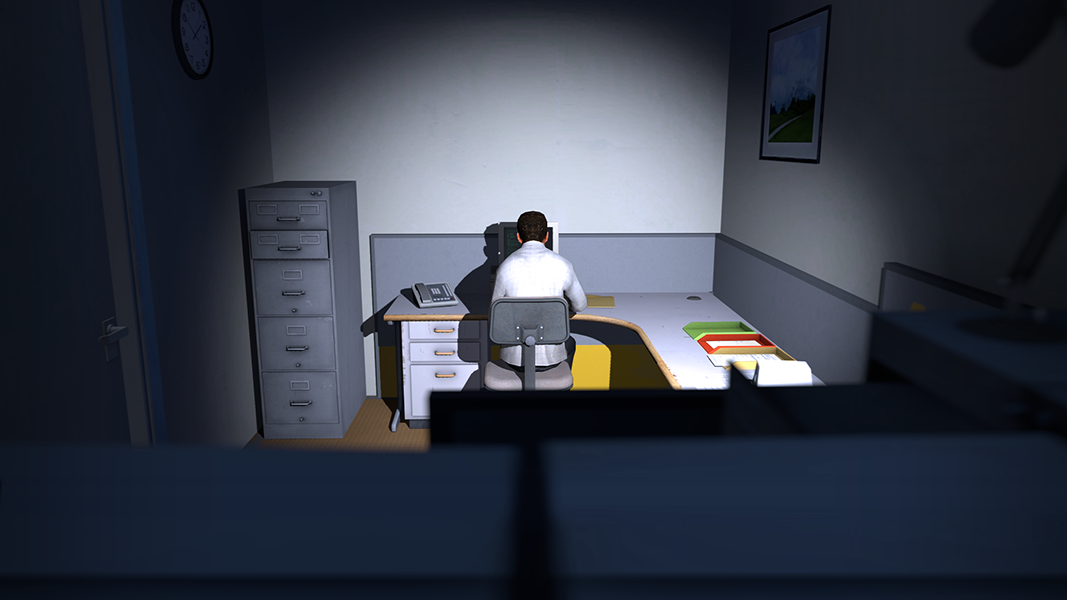

When I talked about subverting expectations in games yesterday while discussing Gone Home, this was the game I had in mind. The Staley Parable is less a game and more an experiment. It toys with the notion of player choice in games, or the lack thereof; the idea of agency, of a grand scheme at play, and it all begins in an office, behind a desk, in front of a computer screen. You are Stanley, an average Joe content to work the same menial job for the rest of his life. But when, on one peculiar day, Stanley decides to get up from his desk and realizes that everyone else in the office building has disappeared, the foundations of his very existence come into question. Accompanied by the brilliant narration of the game’s all-seeing storyteller, The Stanley Parable is simply the kind of game you just need to experience for yourself. There is no amount of praise that can do it justice. The Stanley Parable can be completed in 10 minutes or 10 hours: how you choose to get to an ending, and how long it takes, is entirely up to you. And trust me when I say there are dozens of endings.

The Legend of Zelda: A Link Between Worlds


When Nintendo created The Legend of Zelda series nearly 20 years ago, they knew they were onto something special: the sense of openness, the danger, the feeling of being a legendary hero, the old fashioned kidnapped princess. It was a truly brilliant game. Since then, Nintendo has managed to only briefly recapture that magic in less than a handful of games. The Legend of Zelda: A Link Between Worlds is not only the best game in the series in over a decade, but it is easily in the top five ever, and certainly one of the greatest across all of Nintendo’s storied library. The same freedom found in the original finally returns, creating a truly exciting and harrowing adventure as you brave the dungeons and face the dangers in any order you wish. Along the way you’ll come up against some of the most brilliantly designed puzzles that only Nintendo can do so well set to newly arranged versions of some classic Zelda tunes.

The Last of Us
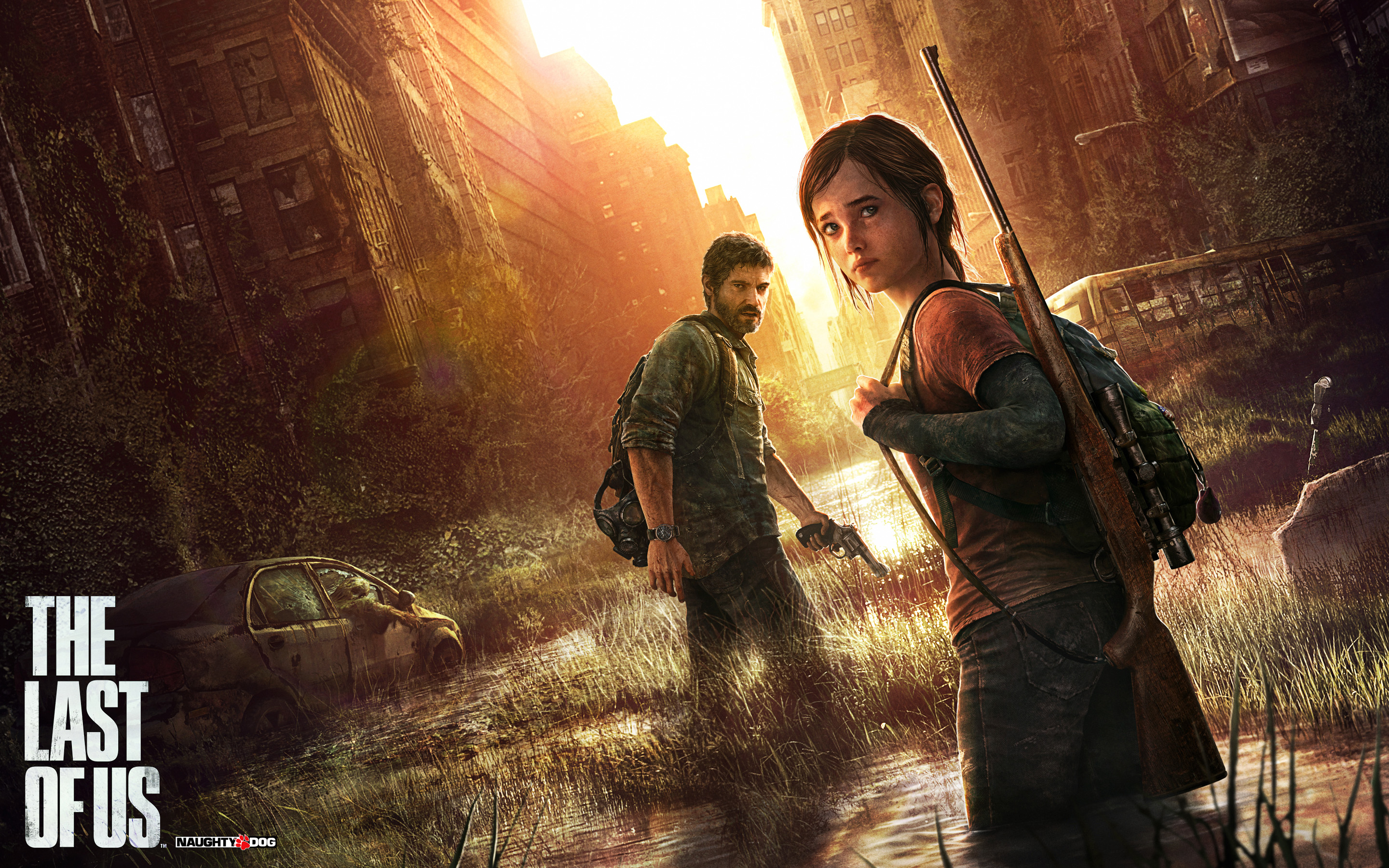

I have no shame in admitting that I am not the world’s biggest fan of the Uncharted games. They were good, by all means, but they were just that. The level of excitement and anticipation that built up around them eluded me, so when it was announced that Naughty Dog’s next project was going to be a zombie game, you can understand my reluctance. “Oh, great, one of those kinds of games from these guys?” How naïve I was, and happily so. What Naughty Dog and the brilliant team of actors, led by Troy Baker and Ashley Johnson, managed to do with this fairly average, admittedly generic premise, was create an experience with so much heart and so much emotion that you simply could not disregard it. The journey of Joel and Ellie across the ravaged, infected United States would have been void of excitement if not for the chemistry between these actors and the empathy you feel for their characters. Its crushing introduction and absolutely devastating finale aside, The Last of Us is one of the most emotional games of the generation.

BioShock Infinite


There’s just something about the world of BioShock Infinite that just keeps calling to me, even after so many months have passed since I finished it: Its haunting beauty, its dark comedy, its terrifying appeal. It’s a place that has no right to exist, and yet on its surface appears a place you could never live without. The nuances of the characters, from Elizabeth’s doe-eyed expressions to the Lutece twins’ disjointing riddles, create a sense of wonder and awe in a world that is brimming with eccentricity. But throughout its early hours, you know something is not right and you just can’t quite put your finger on it. Perhaps it’s the strange baptismal entrance into Columbia, or maybe the obvious floating city in the sky bit. Or maybe – wait, is that…are they singing “God Only Knows” by the Beach Boys? I thought this game was set in 1912? That song doesn’t come out until 1966. What’s going on?

That’s just the kind of lunacy you’ll experience in sprinkled doses throughout your journey in BioShock Infinite, all of it culminating in a profound and cathartic message about the state of the games industry, the BioShock series included. Ken Levine isn’t a man to shy from a bit of pretense, and though the ending can be construed as somewhat preachy, if not a little heavy-handed, it cannot be ignored. Coupled with some fantastically visceral combat and the outstanding use of the city’s Sky-Line as more than just a glorified set piece, and BioShock Infinite wasn’t just an amazing story, but a wholly satisfying gaming experience altogether.

Coming up tomorrow, my Most Anticipated Games of 2014.

Friday, December 20, 2013

The Games of 2013 - Day Three

Most Overrated Game
 

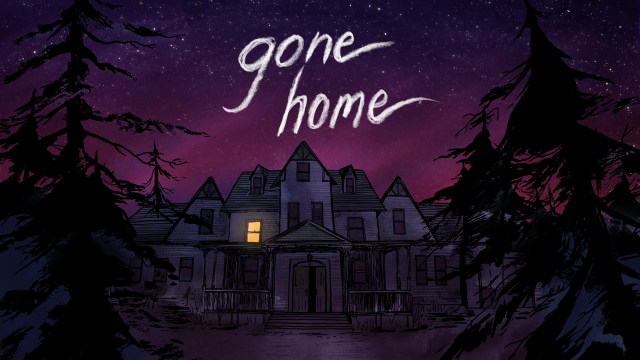
I played through Gome Home expecting a tense, disturbing haunted house adventure. What I got was a somber and rather unconventional story about teenagers in love. That’s not why I feel the game is overrated. It’s one of those situations where the premise belies the conclusion, and not in a good way. Exploring the atmospheric Greenbriar mansion situated in the Pacific Northwest of 1995 was a genuine treat, and allowed the player to assume his or her own suspicions about what happened there. Discovering little clues about the family, identifying with the 90s culture and music of the time, all of it felt very well placed and tastefully done. And then slowly all of the charm of the house and the mystique about the family turns into a story about teenage angst and forbidden love. You see, the game’s “main” character is never seen on screen, but rather you play as Kaitlin who has returned home after a year of being away to find the house strangely vacant. Through notes and other strange oddities lying around the house, it’s your job to piece together what has happened there.

Kaitlin’s younger sister, Samantha, is the true main character, and you only see her through letters written to Kaitlin that are scattered about. It’s from these letters that you piece together the bulk of the “main” story, which essentially boils down to Samantha running away with her lover, Lonnie, a would-be Army volunteer who changed her mind at the last minute. Don’t get me wrong, I understand the context, and given the game’s period setting, I recognize the kind of message it was trying to send about homosexuality and love. But I wouldn’t have cared any more if it were two straight characters in love, either – that’s the problem. The game does so much to convince you that something awful happened here, when in the end two kids just decided to run away together. It subverts the notion of expectation from games, something I appreciate, but does it in a way that feels contrived and preachy. Exploring the house was far more interesting than reading about two kids in love.

Most Underrated Game


Rayman Legends is not underrated in the exact definition of the word: in fact, it has received near universal critical acclaim for its gorgeous art direction and terrifically structured platforming. However, no one played it. Don’t you lie to me. This game went so far criminally under the radar that it’s basically a catastrophe, which is upsetting because this is possibly one of the finest side-scrolling platformers ever made. Yeah, I said it. I shouldn’t even have to go into the reasons why Rayman Legends is worthy of your playtime: the fact that the game was delayed for nearly 10 months to allow it to be ported to nearly every single available platform gives you no excuse for not playing it. Do yourself a favor, buy this game. If you don’t have the money to buy it, tell someone else to buy it for you for Christmas. If you live a sad and lonely life, go to any electronic store that has a Wii U set up for playing and chances are Rayman Legends will be one of the available demos. Stay there for a few hours and play the damn game. 

Up next, my Top 5 Games of 2013.

Thursday, December 19, 2013

The Games of 2013 - Day Two

Why Grand Theft Auto V, Assassin’s Creed IV: Black Flag, and many others are not going to be on my list

Perhaps the most egregious sin one could commit would be to not recognize some of the biggest games of the year: games like Grand Theft Auto V, Assassin’s Creed IV: Black Flag, Batman: Arkham Origins, and many more. Let’s get one thing out of the way: it’s not that I felt like most of these games were bad (although some of them were), it’s just that none of them carried any sort’ve weight to them. By that I mean, they felt like hollow experiences. I was left wondering why I was even playing some of these games just a few hours into them, and others I didn’t even find myself caring enough to play them for even a minute. So, let’s start with the big one: Grand Theft Auto V.


Rockstar has never made a bad game. I stand by this statement, and even though I have not personally liked every single one of their products, I acknowledge their value. So when Grand Theft Auto V was released, I expected to lose the rest of the year to this game, as I had done with previous iterations. How could I not? The game’s massive world was so large in scope it was touted as being the biggest in the series to date, completely open and free to explore from the start. The attention to detail in the game, for even the most mundane, miniscule features, was astonishing. As always, the game’s licensed soundtrack left nothing to be desired, and the game’s gritty, flawed characters were all fascinating in their own, individually corrupt way. So why did I get bored so quickly?

Well, for one, the game is almost counter-intuitive to its freedom. There is so much to do, that you can easily overwhelm yourself and get distracted. To many people, this is a plus, and there is no fault in that, but as someone who has come to expect consistency and coherency in the storytelling from Rockstar, the fact that the game does allow for so much meandering almost defeats the purpose of trying to tell such a meaningful story. It breaks any sense of connection or empathy with the characters when there is such a jarring juxtaposition from one scene to the next. Granted, the counter-argument to that is something along the lines of, “But you could always drive around and kill hookers and do whatever you wanted, so why is it a problem now!”

So much to do, so little reason to do it.
Well, this is why: Rockstar is taking themselves far too seriously now. In a game like San Andreas, which was up until the release of GTA V largely considered the most open game in the series, the story was far more tongue-and-cheek. Even Vice City before it, which took more than enough queues from Scarface and Miami Vice with people like Tommy Vercetti and Lance Vance, acknowledged its own humor. These people weren’t characters – they were caricatures: larger than life representations of cops, thugs, crime lords, and drug dealers. It wasn’t until Grand Theft Auto IV where Rockstar took a step back and said, “Well, let’s try doing something with a little more heart.” And while this polarized many of the fanbase, I was on the side of those that absolutely adored it. This was what I had always envisioned a Grand Theft Auto game to be: restrained, witty, intelligent. If I wanted to have absolute freedom in an environment without rules, and with a story that understood its place, I’d play Saint’s Row or Just Cause. But Grand Theft Auto V seemed to try way too hard to please both worlds, and in the end just ended up being a giant world with so much to do, and very little reason to do it.

Assassin’s Creed IV: Black Flag suffers from a similar problem, but to a much lesser degree. If there’s one thing that can be universally agreed upon about this game, it’s that the naval combat is far and away the best part of it. That being said, everything else is just…Assassin’s Creed, and that’s not a terribly good thing: inane side-missions, spotty platforming, poor character development, and absolutely inconsequential modern-day cutscenes that no one rightfully cares about. I get it, Ubisoft. This game and Assassin’s Creed III were just your ways of testing the waters (pun intended) for a pirate game. So just make a damn full-fledged pirate game already, then, and stop dragging this series into the mud. The franchise lost its flair when you got rid of the most interesting character, Ezio, so forgive me for not caring about any other ancestor of Desmond Miles, a character you – SPOILER ALERT – killed off in the last game. Don’t try to convince me there are still more stories to tell, because if that were true you’d have told them in a proper order.

We all know Ubisoft just wants to make an actual pirate game, so just make it.
 Of all the games not to be included on my final “Best of” list, those were the two that I felt needed the most amount of justification, and obviously of them, Grand Theft Auto V more so. But other games that you can look forward to not seeing in a few days are Batman: Arkham Origins, Battlefield 4, Call of Duty: Ghosts, and Beyond: Two Souls. I’ll just rapid fire through them as reasonably as I can.

Batman: Arkham Origins. The original Arkham City was a good, solid game. It was a great rebirth for the caped crusader in the world of video games, after some noticeably abysmal attempts years ago. But that’s it. Beyond this it was nothing more than a standard block-counter action game with very little depth to its combat, and not much in the way of longstanding impact. It was just an okay game that happened to do extremely well financially because it wasn’t as bad as the older games, and understandably, the studios saw this as a way to create a new franchise. Pretty soon there’s going to be an Arkham-themed online game.

Battlefield 4 and Call of Duty: Ghosts. I’ll lump these two together because quite frankly, can anyone tell them apart anymore? Activision has run the Call of Duty franchise so far into the spectrum of cash cow that there’s really no reason to recognize or distinguish any of these games anymore as other than a yearly expansion pack. As for Battlefield 4, EA took what could have once been described as a true competitor to Call of Duty, and arguably one of the finest multiplayer first-person shooters on the market, and turned it into a “Call of Duty killer.” Which, if you’ve never played World of Warcraft and aren’t familiar with what it means for a game to be a killer, it’s when a development studio tries so hard to emulate the reigning king that it ends up just backfiring in their face, because if all they’re doing is making a copy of the game that already exists, then why would anyone switch?

Not even Willem Dafoe can make me play this.
Beyond: Two Souls. Fool me once, David Cage, shame on you. Fool me twice, shame on me. I’m not one to argue about whether or not a game is a “game” or a “movie.” Frankly, if you interact with it in some way, it has merit being called a game. To the Moon is one of my most cherished experiences this entire generation, and there was very little true “gameplay” in it. So when Heavy Rain was released several years ago, I was excited about it. I wanted to see what kind of story could be told through such a hands-on visual medium. The promise of an ever-evolving storyline where a character’s death would have a direct effect on the outcome only enhanced my expectations. So naturally, when I played through Heavy Rain, I was extremely careful with my decisions so as to get the best ending possible. Game breaking freezes and some spotty voice acting aside, I enjoyed the experience throughout. It was only upon reevaluation of the game that I noticed some terrible inconsistencies in character development and plot. For that reason alone, I refused to check out Beyond: Two Souls. It could be an amazing game for all I know, and maybe one day I might realize it, but right now, for me, David Cage is quickly becoming the more pretentious version of Peter Molyneux, and I have no interest in fellating his ego any more than others already do.

Sorry, that wasn’t rapid-fire enough, was it? Tomorrow, find out what I feel are the most Overrated and Underrated games of 2013.

Wednesday, December 18, 2013

The Games of 2013 - Day One

2013 was a big year for gaming. I feel like I say this every year, but this one in particular, on the cusp of a new console generation, has been particularly spectacular. Risks were taken, franchises were broadened, the independent scene exploded, and the free-to-play market was established as a true and proper business model. I can’t say I’ve been fortunate enough to play every single game that has come out this year, and quite frankly there are some I wish I had played that may have possibly ended up on this list; but, the fact of the matter is, what I did play either stuck with me for all the right reasons or made me question whether everyone else around me was playing the same thing

I’ve broken my list up into a few different sections. From now until Christmas I will be discussing the many games that came out this year: those that just narrowly missed out on my “Best of” list, those that I felt had no place at all, and others I felt were just not warranting of the attention they received. I will cap off this series of articles with my Top 5 Games of 2013, followed by my most anticipated games of next year. So, let’s begin.

The Runners-Up

Metal Gear Rising: Revengeance


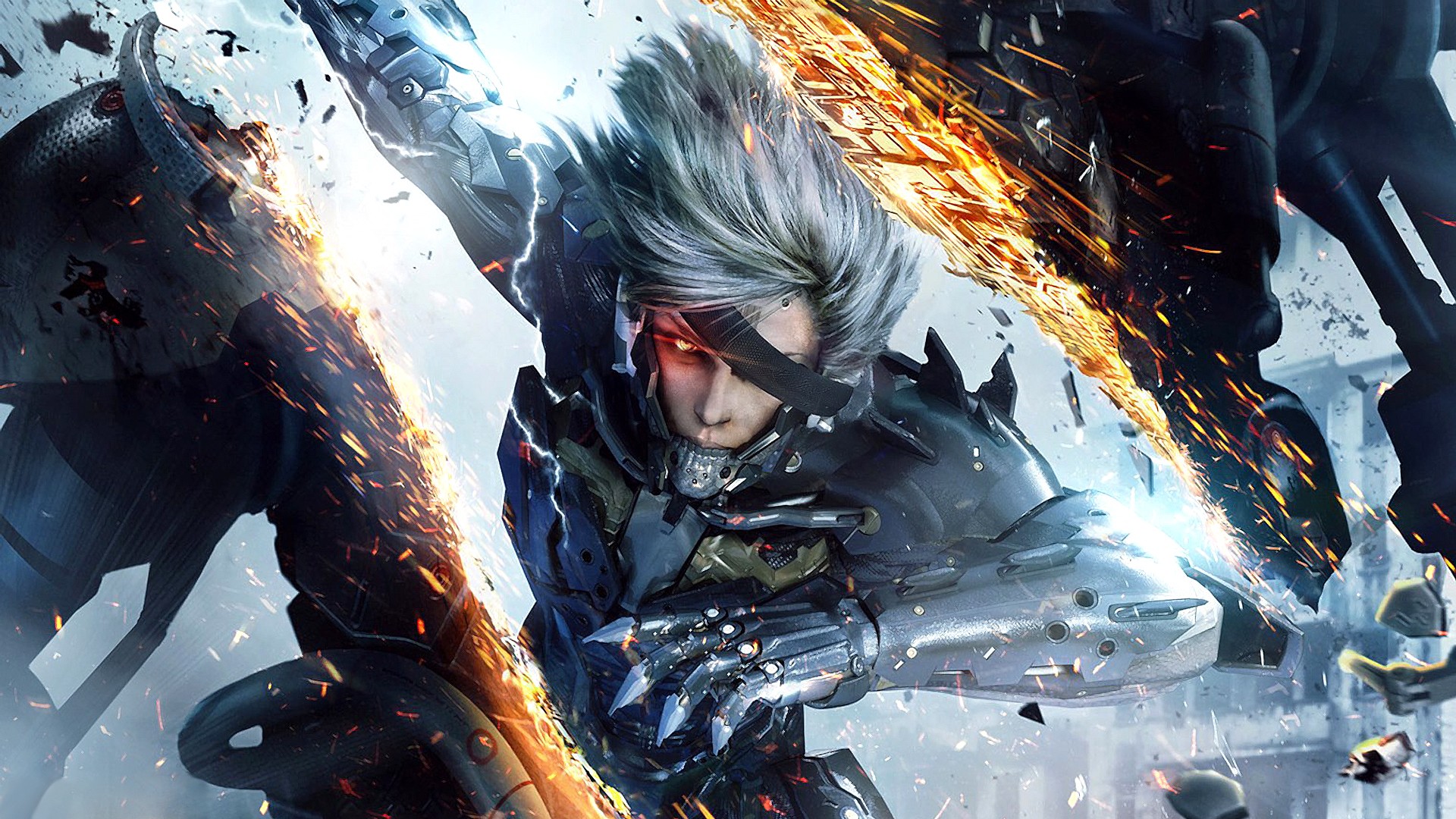
Revengeance was, at its core, an unadulterated bloody romp that only loosely called the Metal Gear series family. It exists entirely as a standalone game and requires no preexisting knowledge of its parent series. What it does require, however, is a tremendous amount of patience and persistence. Revengeance is a difficult game, even on its lowest setting, but nary a moment felt too difficult, all except for the game’s final battle. That fight notwithstanding, combat in Revengeance was tight, fast, and blissfully entertaining. The game’s use of slow-motion to allow players to slice-and-dice with precision was its most impressive feature, and gave such an already-unique action game something to boast about.

Shadowrun Returns


I’m a sucker for strategy games, so when this reboot of the classic cyberpunk RPG – based on the tabletop game of the same name – was announced in early 2012 as a Kickstarter project, I was immediately excited. Not only was this game properly difficult, but the level of customization with characters guaranteed that any subsequent playthrough would be unique; it’s dark and seedy story allowed for clear distinction between choice and consequence; and the release of the game’s developer tools gave many the ability to create their own custom maps and stories for the world to play.

Ni no Kuni: Wrath of the White Witch


Traditional Japanese RPGs have made huge strides over the last decade to intentionally stagnate and devolve, or worse yet, remain exactly the same. Sure, some have broken through that stigma and proved that this dying sub-genre still has a pulse – games like Xenoblade Chronicles and Resonance of Fate have shown that you can mutate the formula and still create deep, engrossing games without losing what makes the jRPG so special. Ni no Kuni: Wrath of the White Witch does this in spades, but ironically, without changing too much. Combat is a generous mix of real-time and turn-based, an assimilation of Pokémon and a Tales of game. But it’s the game’s outstanding art direction, its brilliant cast of characters, and its exceptional music and voice acting that elevate this into a pantheon co-inhabited by the likes of Chrono Cross and Final Fantasy Tactics: games that, at their core, have the heart to tell a mature story through the eyes of children.

Shin Megami Tensei IV

  
Speaking of Japanese RPGs, Shin Megami Tensei IV is another to have just narrowly missed out on being included in my top 5 of the year, not for any other reason than because the ones that did make it are just that good. The MegaTen series has become my favorite longstanding series, ever since I first played Digital Devil Saga on a sheer whim, and if you don't believe me just take a look at the retrospective I wrote of the series last month. What these games prove is that you can take a rather simple formula and evolve it just enough so that no two games are identical, but still retain the DNA of its predecessor. Couple that with some of the darkest, most twisted stories about demons and high school students, God versus the Devil, and total annihilation of the world, and the Shin Megami Tensei games are the perfect antidote for the jaded Final Fantasy fan. What SMT IV brought to the table was the series’ staple difficulty and its relentless attempts to make the player give up. But persevere, and you will find an experience like no other.

Tomb Raider


If you would have asked me a few years ago whether I still cared about the Tomb Raider series, or Lara Croft, I would have laughed at you. Barring this release, the only game that had me remotely interested in either was Lara Croft and the Guardian of Light, a 2010 action-platformer more akin to Diablo than anything else this series had to offer. But earlier this year, the team at Crystal Dynamics proved that you can still teach an old dog new tricks. Borrowing from the Uncharted series, which in turn borrowed from Tomb Raider, this franchise reboot featured a much more grounded Lara Croft put into a series of extraordinarily dangerous situations as a fledgling adventurer shipwrecked on a strange island. Where the dashing Nathan Drake of Uncharted would respond to his adversaries with clever quips, or brush off an injury or some sort of terrible fall like a pro wrestler, Lara felt real – human. Her pain was excruciating, and if there was one way to describe the evolution of her character, then Crystal Dynamics has already done it with the very tagline of this game – a survivor is born.

 Coming up tomorrow: Why Grand Theft Auto V, Assassin’s Creed IV: Black Flag, and many others are not going to be on my list