I
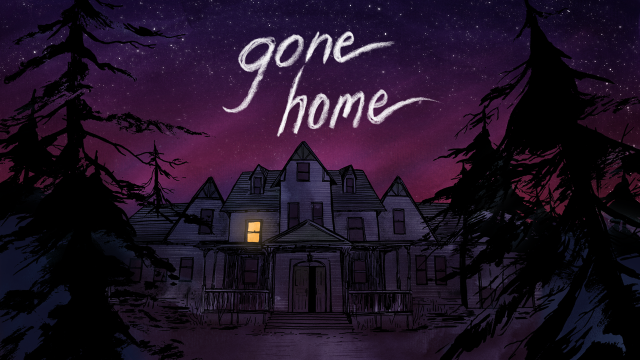
played through Gome Home expecting a
tense, disturbing haunted house adventure. What I got was a somber and rather
unconventional story about teenagers in love. That’s not why I feel the game is
overrated. It’s one of those situations where the premise belies the
conclusion, and not in a good way. Exploring the atmospheric Greenbriar mansion
situated in the Pacific Northwest of 1995 was a genuine treat, and allowed the
player to assume his or her own suspicions about what happened there.
Discovering little clues about the family, identifying with the 90s culture and
music of the time, all of it felt very well placed and tastefully done. And
then slowly all of the charm of the house and the mystique about the family
turns into a story about teenage angst and forbidden love. You see, the game’s
“main” character is never seen on screen, but rather you play as Kaitlin who
has returned home after a year of being away to find the house strangely
vacant. Through notes and other strange oddities lying around the house, it’s
your job to piece together what has happened there.
Kaitlin’s
younger sister, Samantha, is the true main character, and you only see her
through letters written to Kaitlin that are scattered about. It’s from these
letters that you piece together the bulk of the “main” story, which essentially
boils down to Samantha running away with her lover, Lonnie, a would-be Army
volunteer who changed her mind at the last minute. Don’t get me wrong, I
understand the context, and given the game’s period setting, I recognize the
kind of message it was trying to send about homosexuality and love. But I
wouldn’t have cared any more if it were two straight characters in love, either
– that’s the problem. The game does so much to convince you that something
awful happened here, when in the end two kids just decided to run away
together. It subverts the notion of expectation from games, something I
appreciate, but does it in a way that feels contrived and preachy. Exploring
the house was far more interesting than reading about two kids in love.
Most Underrated Game
Rayman Legends is not underrated in
the exact definition of the word: in fact, it has received near universal
critical acclaim for its gorgeous art direction and terrifically structured
platforming. However, no one played it. Don’t you lie to me. This game went so
far criminally under the radar that it’s basically a catastrophe, which is
upsetting because this is possibly one of the finest side-scrolling platformers
ever made. Yeah, I said it. I shouldn’t even have to go into the reasons why Rayman Legends is worthy of your
playtime: the fact that the game was delayed for nearly 10 months to allow it
to be ported to nearly every single available platform gives you no excuse for
not playing it. Do yourself a favor, buy this game. If you don’t have the money
to buy it, tell someone else to buy it for you for Christmas. If you live a sad
and lonely life, go to any electronic store that has a Wii U set up for playing
and chances are Rayman Legends will
be one of the available demos. Stay there for a few hours and play the damn
game.
Why Grand Theft Auto
V, Assassin’s Creed IV: Black Flag, and many others are not going to be on my
list
Perhaps
the most egregious sin one could commit would be to not recognize some of the
biggest games of the year: games like Grand
Theft Auto V, Assassin’s Creed IV:
Black Flag, Batman: Arkham Origins,
and many more. Let’s get one thing out of the way: it’s not that I felt like
most of these games were bad (although some of them were), it’s just that none
of them carried any sort’ve weight to them. By that I mean, they felt like
hollow experiences. I was left wondering why I was even playing some of these games
just a few hours into them, and others I didn’t even find myself caring enough
to play them for even a minute. So, let’s start with the big one: Grand Theft Auto V.
Rockstar
has never made a bad game. I stand by this statement, and even though I have
not personally liked every single one of their products, I acknowledge their
value. So when Grand Theft Auto V was
released, I expected to lose the rest of the year to this game, as I had done
with previous iterations. How could I not? The game’s massive world was so
large in scope it was touted as being the biggest in the series to date,
completely open and free to explore from the start. The attention to
detail in the game, for even the most mundane, miniscule features, was
astonishing. As always, the game’s licensed soundtrack left nothing to be
desired, and the game’s gritty, flawed characters were all fascinating in their
own, individually corrupt way. So why did I get bored so quickly?
Well,
for one, the game is almost counter-intuitive to its freedom. There is so much
to do, that you can easily overwhelm yourself and get distracted. To many
people, this is a plus, and there is no fault in that, but as someone who has
come to expect consistency and coherency in the storytelling from Rockstar, the
fact that the game does allow for so much meandering almost defeats the purpose
of trying to tell such a meaningful story. It breaks any sense of connection or
empathy with the characters when there is such a jarring juxtaposition from one
scene to the next. Granted, the counter-argument to that is something along the
lines of, “But you could always drive around and kill hookers and do whatever
you wanted, so why is it a problem now!”
So much to do, so little reason to do it.
Well,
this is why: Rockstar is taking themselves far too seriously now. In a game
like San Andreas, which was up until
the release of GTA V largely
considered the most open game in the series, the story was far more
tongue-and-cheek. Even Vice City
before it, which took more than enough queues from Scarface and Miami Vice
with people like Tommy Vercetti and Lance Vance, acknowledged its own humor. These people weren’t characters –
they were caricatures: larger than
life representations of cops, thugs, crime lords, and drug dealers. It wasn’t
until Grand Theft Auto IV where
Rockstar took a step back and said, “Well, let’s try doing something with a
little more heart.” And while this polarized many of the fanbase, I was on the
side of those that absolutely adored it. This was what I had always envisioned
a Grand Theft Auto game to be: restrained,
witty, intelligent. If I wanted to have absolute freedom in an environment
without rules, and with a story that understood its place, I’d play Saint’s Row or Just Cause. But Grand Theft
AutoV seemed to try way too hard
to please both worlds, and in the end just ended up being a giant world with so
much to do, and very little reason to do it.
Assassin’s Creed IV:
Black Flag
suffers from a similar problem, but to a much lesser degree. If there’s one
thing that can be universally agreed upon about this game, it’s that the naval
combat is far and away the best part of it. That being said, everything else is
just…Assassin’s Creed, and that’s not
a terribly good thing: inane side-missions, spotty platforming, poor character
development, and absolutely inconsequential modern-day cutscenes that no one
rightfully cares about. I get it, Ubisoft. This game and Assassin’s Creed III were just your ways of testing the waters (pun
intended) for a pirate game. So just make a damn full-fledged pirate game
already, then, and stop dragging this series into the mud. The franchise lost
its flair when you got rid of the most interesting character, Ezio, so forgive
me for not caring about any other ancestor of Desmond Miles, a character you –
SPOILER ALERT – killed off in the last game. Don’t try to convince me there are
still more stories to tell, because if that were true you’d have told them in a
proper order.
We all know Ubisoft just wants to make an actual pirate game, so just make it.
Of
all the games not to be included on my final “Best of” list, those were the two
that I felt needed the most amount of justification, and obviously of them, Grand Theft Auto V more so. But other
games that you can look forward to not seeing in a few days are Batman: Arkham Origins, Battlefield 4, Call
of Duty: Ghosts, and Beyond: Two
Souls. I’ll just rapid fire through them as reasonably as I can.
Batman: Arkham
Origins.
The original Arkham City was
a good, solid game. It was a great rebirth for the caped crusader in the world
of video games, after some noticeably abysmal attempts years ago. But that’s
it. Beyond this it was nothing more than a standard block-counter action game
with very little depth to its combat, and not much in the way of longstanding
impact. It was just an okay game that happened to do extremely well financially
because it wasn’t as bad as the older games, and understandably, the studios
saw this as a way to create a new franchise. Pretty soon there’s going to be an
Arkham-themed online game.
Battlefield 4 and Call of Duty: Ghosts. I’ll lump these
two together because quite frankly, can anyone tell them apart anymore?
Activision has run the Call of Duty franchise
so far into the spectrum of cash cow that there’s really no reason to recognize
or distinguish any of these games anymore as other than a yearly expansion
pack. As for Battlefield 4, EA took
what could have once been described as a true competitor to Call of Duty, and arguably one of the
finest multiplayer first-person shooters on the market, and turned it into a “Call of Duty killer.” Which, if you’ve
never played World of Warcraft and
aren’t familiar with what it means for a game to be a killer, it’s when a
development studio tries so hard to emulate the reigning king that it ends up
just backfiring in their face, because if all they’re doing is making a copy of
the game that already exists, then why would anyone switch?
Not even Willem Dafoe can make me play this.
Beyond: Two Souls. Fool me once, David
Cage, shame on you. Fool me twice, shame on me. I’m not one to argue about
whether or not a game is a “game” or a “movie.” Frankly, if you interact with
it in some way, it has merit being called a game. To the Moon is one of my most cherished experiences this entire
generation, and there was very little true “gameplay” in it. So when Heavy Rain was released several years
ago, I was excited about it. I wanted to see what kind of story could be told
through such a hands-on visual medium. The promise of an ever-evolving
storyline where a character’s death would have a direct effect on the outcome
only enhanced my expectations. So naturally, when I played through Heavy Rain, I was extremely careful with
my decisions so as to get the best ending possible. Game breaking freezes and
some spotty voice acting aside, I enjoyed the experience throughout. It was
only upon reevaluation of the game that I noticed some terrible inconsistencies
in character development and plot. For that reason alone, I refused to check
out Beyond: Two Souls. It could be an
amazing game for all I know, and maybe one day I might realize it, but right
now, for me, David Cage is quickly becoming the more pretentious version of
Peter Molyneux, and I have no interest in fellating his ego any more than
others already do.
Sorry, that wasn’t rapid-fire enough, was it? Tomorrow, find out what I feel are the most Overrated and Underrated games of 2013.
2013
was a big year for gaming. I feel like I say this every year, but this one in
particular, on the cusp of a new console generation, has been particularly
spectacular. Risks were taken, franchises were broadened, the independent scene
exploded, and the free-to-play market was established as a true and proper
business model. I can’t say I’ve been fortunate enough to play every single
game that has come out this year, and quite frankly there are some I wish I had
played that may have possibly ended up on this list; but, the fact of the
matter is, what I did play either stuck with me for all the right reasons or
made me question whether everyone else around me was playing the same thing
I’ve
broken my list up into a few different sections. From now until Christmas I
will be discussing the many games that came out this year: those that just
narrowly missed out on my “Best of” list, those that I felt had no place at
all, and others I felt were just not warranting of the attention they received. I
will cap off this series of articles with my Top 5 Games of 2013, followed by my most anticipated games of next year. So, let’s begin.
The Runners-Up
Metal Gear Rising: Revengeance
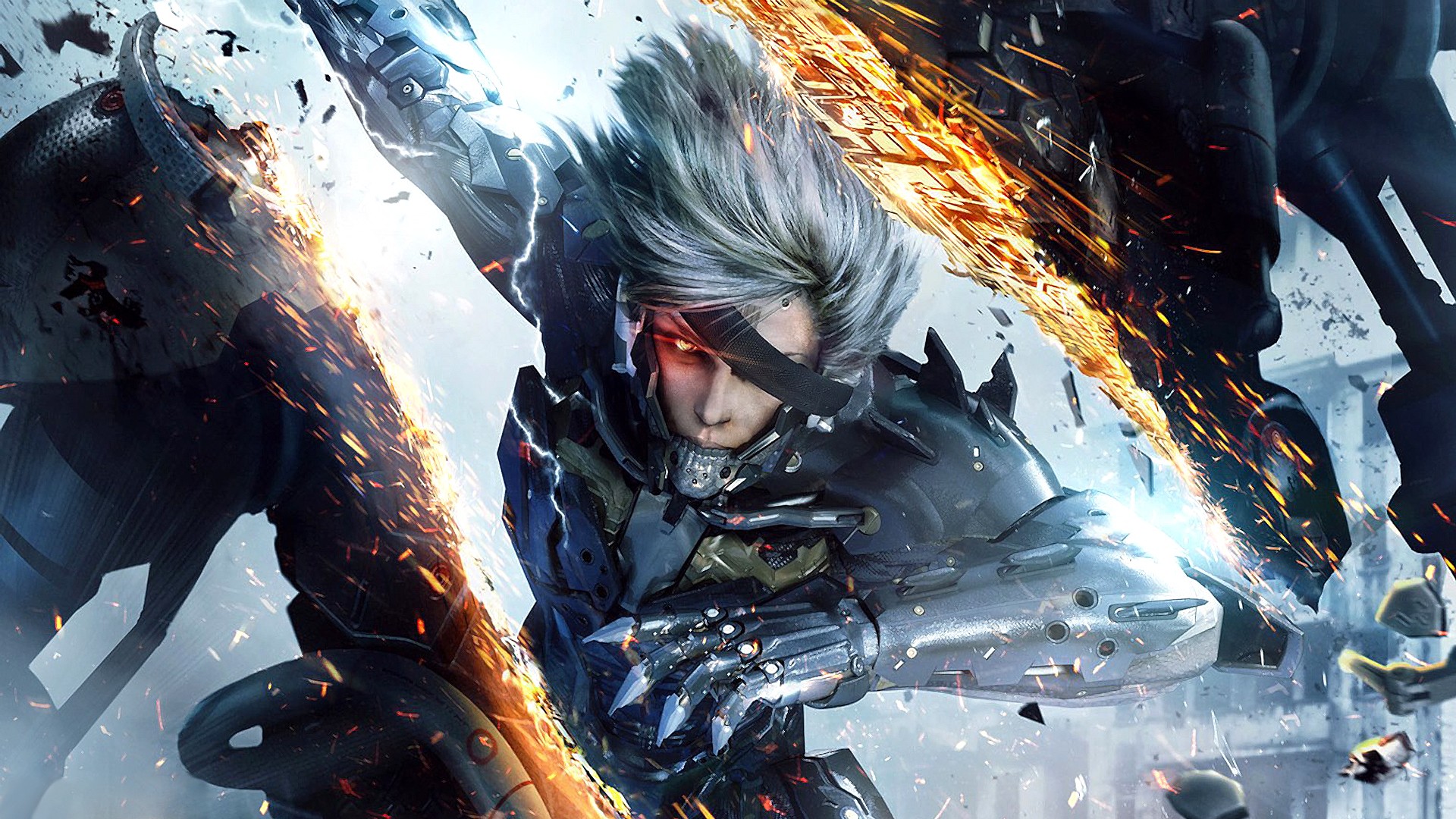
Revengeance was, at its core, an unadulterated
bloody romp that only loosely called the Metal
Gear series family. It exists entirely as a standalone game and requires no
preexisting knowledge of its parent series. What it does require, however, is a
tremendous amount of patience and persistence. Revengeance is a difficult game, even on its lowest setting, but
nary a moment felt too difficult, all except for the game’s final battle. That
fight notwithstanding, combat in Revengeance
was tight, fast, and blissfully entertaining. The game’s use of slow-motion to
allow players to slice-and-dice with precision was its most impressive feature,
and gave such an already-unique action game something to boast about.
Shadowrun Returns
I’m a
sucker for strategy games, so when this reboot of the classic cyberpunk RPG –
based on the tabletop game of the same name – was announced in early 2012 as a Kickstarter
project, I was immediately excited. Not only was this game properly difficult,
but the level of customization with characters guaranteed that any subsequent
playthrough would be unique; it’s dark and seedy story allowed for clear
distinction between choice and consequence; and the release of the game’s
developer tools gave many the ability to create their own custom maps and
stories for the world to play.
Ni no Kuni: Wrath of the White Witch
Traditional
Japanese RPGs have made huge strides over the last decade to intentionally
stagnate and devolve, or worse yet, remain exactly the same. Sure, some have
broken through that stigma and proved that this dying sub-genre still has a
pulse – games like Xenoblade Chronicles and
Resonance of Fate have shown that you
can mutate the formula and still create deep, engrossing games without losing
what makes the jRPG so special. Ni no
Kuni: Wrath of the White Witch does this in spades, but ironically, without
changing too much. Combat is a generous mix of real-time and turn-based, an assimilation of Pokémon and a Tales of game. But it’s the game’s
outstanding art direction, its brilliant cast of characters, and its
exceptional music and voice acting that elevate this into a pantheon co-inhabited
by the likes of Chrono Cross and Final Fantasy Tactics: games that, at
their core, have the heart to tell a mature story through the eyes of children.
Shin Megami Tensei IV
Speaking
of Japanese RPGs, Shin Megami Tensei IV
is another to have just narrowly missed out on being included in my top 5 of
the year, not for any other reason than because the ones that did make it are
just that good. The MegaTen series has become my favorite
longstanding series, ever since I first played Digital Devil Saga on a sheer whim, and if you don't believe me just take a look at the retrospective I wrote of the series last month. What these games prove is that
you can take a rather simple formula and evolve it just enough so that no two
games are identical, but still retain the DNA of its predecessor. Couple that
with some of the darkest, most twisted stories about demons and high school
students, God versus the Devil, and total annihilation of the world, and the Shin Megami Tensei games are the perfect
antidote for the jaded Final Fantasy
fan. What SMT IV brought to the table
was the series’ staple difficulty and its relentless attempts to make the
player give up. But persevere, and you will find an experience like no other.
Tomb Raider
If you
would have asked me a few years ago whether I still cared about the Tomb Raider series, or Lara Croft, I
would have laughed at you. Barring this release, the only game that had me
remotely interested in either was Lara
Croft and the Guardian of Light, a 2010 action-platformer more akin to Diablo than anything else this series had
to offer. But earlier this year, the team at Crystal Dynamics proved that you
can still teach an old dog new tricks. Borrowing from the Uncharted series, which in turn borrowed from Tomb Raider, this franchise reboot featured a much more grounded
Lara Croft put into a series of extraordinarily dangerous situations as a
fledgling adventurer shipwrecked on a strange island. Where the dashing Nathan
Drake of Uncharted would respond to
his adversaries with clever quips, or brush off an injury or some sort of
terrible fall like a pro wrestler, Lara felt real – human. Her pain was excruciating,
and if there was one way to describe the evolution of her character, then
Crystal Dynamics has already done it with the very tagline of this game – a survivor
is born.
Coming up tomorrow:Why Grand Theft Auto V, Assassin’s Creed IV:
Black Flag, and many others are not going to be on my list
December 2013's Spotlight Review goes to Ghost Trick: Phantom Detective, a brilliant adventure game released in the winter of 2011, at a time when there was much hullabaloo over Mass Effect 2, Dead Space 2, and LittleBigPlanet 2. The game received near universal acclaim, but because of its release window, did not meet the sales expectations of Capcom and was actually cited as one of the contributing factors to Capcom's low sales during that year's first fiscal quarter. The game was released internationally for the iOS in February the following year.
The Short Version
Why You Should Play This Game: Brilliant puzzle design, enchanting characters, and a rich, darkly comedic story assemble to create a spectacular adventure.
What You Can Play It On: Nintendo DS, iOS
Developed and Published by: Capcom
Released: January 11, 2011
The Long Version
Death. Some
fear it, others embrace it. It is an inevitable part of our tiny existence.
Such is the fate of Sissel, an enigmatic and eccentric yellow-haired man whose
life was abruptly cut short following a strange encounter with rookie
female-detective Lynne. But as the saying goes, death is only the beginning. As
the newly-deceased, Sissel finds himself awakened to strange, otherworldly
powers: an ethereal phantom looking down upon his own corpse, his memory now a
clean slate of his past and his future hanging on the brink. He is determined
to find out what happened to him, and why he was killed, but in his new form,
he has just one day to exist. The following morning, he will pass on from this
world and the tragedy will remain unsolved.
Some faiths
believe that death is a cycle, that when one passes, their soul moves on to
another budding reality. In Ghost Trick:
Phantom Detective, such is not the case, because as Sissel the Friendly
Ghost, you will go around bringing people back from the dead in order to solve
your own murder. Unfortunately, yours is not a corpse that can return. Such are
the ways of the ghostly world. The story evolves slowly as you first try to
discover the identity of the female detective present at your murder, but
unravels into a grand plot of secret organizations and grand revelations.
Handled with just the right amount of dark humor, Ghost Trick does not take itself too seriously, but during its
serious moments, you’ll be sure to pay attention.
First and
foremost, Ghost Trick: Phantom Detective
is an adventure game similar to the point-and-click classics of yore. Its
puzzles are more trial and error then they are complex riddles or brain
teasers. Much of the game actually unfolds as a visual novel of sorts, which is
likely given Ace Attorney creator Shu Takumi’s involvement. But the
interactions, when present, are an ingenious mechanic, if sometimes a little
too inconspicuous for their own good. The answer may not always be obvious to
the player, so expect to play through some of the puzzles more than a few times
before making any progress.
As a ghost,
Sissel is able to possess objects with his spirit: not all objects, you see,
just ones that contain “blue cores” as visible in the ghostly world. While in
this phantom state, time is at a standstill, allowing you to jump back and
forth between objects close-enough without wasting precious seconds in the real
world. This is important because Sissel’s powers of resurrection only allow him
to go back four minutes prior to the deceased person’s time of death. In these
last four minutes, you must change the surroundings enough to prevent the death
of whomever you are trying to save: whether it’s moving things in the
environment to get this person out of harm’s way, or directly affecting the
thing that is going to kill him or her. Typically, there is only one way solve
to these puzzles, which is where the many errors will come into play.
Should you
fail, you’ll be given the option to go back and try again. Sometimes this can
be a bit too frustrating, because you might have made a good deal of progress
during the trick phase, only to make one tiny unforeseeable mistake which
results in failure. However, on certain cases, generous checkpoints are set up
that will allow you to return part-way through the puzzle should you fail.
These checkpoints are conveniently known as “Fate Changed,” wherein you will
slightly alter the fate of one or more people involved, but not completely
avert their destiny of doom.
Sissel’s
trick powers range from possession and manipulation of certain objects to
transportation through telephone lines. Such is the way Sissel is able to go
from one crime scene to the next. On one particular case, you will even need to
travel in the midst of a puzzle over a closed line from one floor of a building
to the next. Similarly, in many puzzles, your manipulation of objects must be
one fluid, continuous move. You must string together various tricks in order to
reach places otherwise untouchable, or to gain the attention of the desired
person. Experimentation is key just as much as failure. If at any time you feel
you’ve made a mistake, or you missed an opportunity, you can hit the restart
button which will immediately take you back to the beginning of the crime (or a
checkpoint, should you have reached one) to try again. You needn’t wait until
the actual death to restart, though death may sometimes be a necessary evil.
One of the primary motivations for Sissel is the discovery of who he was. Just
as well, should you let someone die, you might discover something that can help
you prevent that death the next time.
It’s not
until more than half way through the adventure where the player’s control over
objects changes as a result of the added companionship of a new partner. Up
until then, Sisslel’s manipulation of single objects starts to grow thin and
repetitive after you’ve solved your first handful of puzzles. Luckily, before
the game falls too deep into the abyss of stagnation, new powers are granted,
allowing you to swap the position of two objects of similar shape. This adds
tremendous complexity to the puzzles from thereon out, but unfortunately much
of the game is already finished by this point. Perhaps an earlier introduction
of the mechanics could’ve helped keep things fresh all the way through, but
despite this the game still remains interesting with its clever cast and
fascinating story.
Ghost Trick: PhantomDetective
is a strikingly beautiful game vaguely reminiscent of pop art great Andy Warhol’s
colorful and vibrant paintings. The world evokes a classic noir feeling but
seems to contradict itself with lush colors and exaggerated landscapes. The
characters are incredibly atypical of what you might expect someone in a
similar position to be; Sissel is more nonchalant and level-headed then you
might assume, and Lynne, for being the bright-eyed and brainy detective, is
quite free spirited. More than that, their actual representations are
gorgeously crafted caricatures that move with fluid animation across static
backgrounds. Every character in the game is a joy to behold, ranging from the
two aforementioned main characters to the King of Rock-and-Roll, Elvis wannabe
Inspector Cabanela, who is a personal favorite of mine.
The story is
rife with great dialogue that never once feels stale or excessive, a fault many
games of this type too easily succumb to. When the matter calls for it, the characters
are persistent and diligent: otherwise, you’re treated to some genuinely
humorous self-referential comedy and sharp wit. The music is appropriately
jazzy with a crime noir spin, though never strays too far from an uplifting, up
tempo beat to keep the pace of the game exciting. And that’s just it - the game
remains exciting all the way through, nary a dull moment in the story to make
you lose interest and with plenty of exciting twists to keep you engaged.
The
point-and-click adventure genre has seen a dramatic decline since its golden
age, and that’s partly because of its refusal to evolve with the times. What Ghost Trick: Phantom Detective brings to
the table is the classic feeling of puzzle solving found in those games with a
new and brilliant mechanic unlike anything seen before: couple that with a
gorgeous world, thrilling story, and memorable characters, and you come to
realize that the ghostly world is not such a terrible place after all. Its
reliance on trial and error may create a minor bump in the road, but drive over
that and the game is sure to provide one of the best experiences you’re likely
to have on the DS.